Disposal rules for event flowers in Kensington and Chelsea
Posted on 11/10/2026
Event flowers look effortless on the day, but what happens after the guests have gone, the candles are out, and the venue lights are being switched off? The disposal rules for event flowers in Kensington and Chelsea matter more than many people expect. In a busy London borough where venues are often compact, access can be tight, and waste handling needs to be tidy, the aftercare of floral arrangements can affect cost, cleanliness, and even whether the event wraps up smoothly.
Truth be told, flower disposal is rarely the most glamorous part of planning. But it can be one of the easiest parts to get wrong. Should stems go in general waste? Can arrangements be donated? What about foam, wire, ribbon, and water-filled containers? This guide walks through the practical side of it all, in plain English, so you can make sensible decisions without scrambling at the end of the night.
We will cover how disposal typically works, what to avoid, when reuse makes sense, and how to plan ahead so you are not left with soggy foliage in a back hallway at 11:30 p.m. Let's make it simpler.
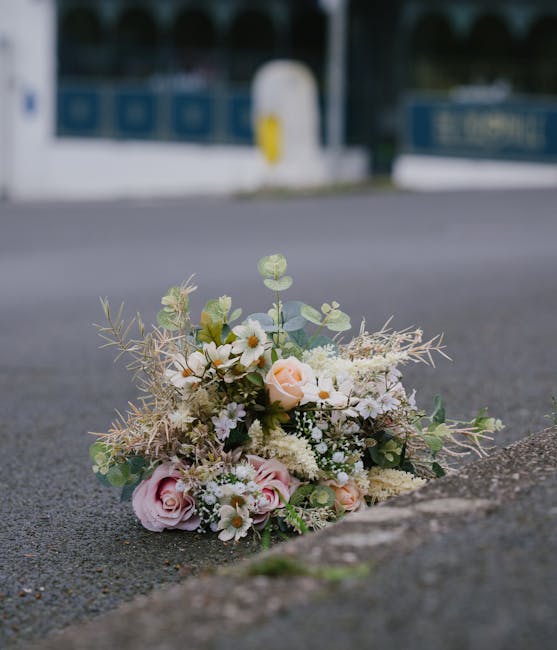
Why Disposal rules for event flowers in Kensington and Chelsea Matters
In Kensington and Chelsea, event spaces range from elegant townhouses and private dining rooms to hotels, galleries, and small business venues where every inch of service space counts. That makes floral disposal a practical issue, not just an aesthetic one. A pile of wilted stems, broken mechanics, and dripping buckets can quickly create clutter, slip risks, and extra work for venue staff.
There is also the local context. Many events in the borough are high-end, time-sensitive, and detail-driven. Guests notice when the room looks polished; they notice less when a clear plan is in place behind the scenes. But venue teams certainly notice. If flowers are left behind without instruction, staff may need to separate recyclable items, remove packaging, and decide what goes where. That is not ideal for anyone.
From a sustainability angle, disposal matters too. Event flowers are often still useful after the event. Some can be reused for smaller arrangements, some can be donated, and some can be composted if they are free from unsuitable materials. The key is knowing which route fits the flowers you actually have. A rose head in good condition is very different from a bouquet bound in florist foam and floral tape.
Expert summary: The best disposal plan is the one made before the event starts. If you decide in advance what will be reused, donated, composted, or binned, the clean-up feels calmer, quicker, and much less wasteful.
How Disposal rules for event flowers in Kensington and Chelsea Works
The basic process is straightforward, even if the details vary by venue and arrangement. Once an event ends, flowers are usually sorted into one of four paths: reuse, donation, composting, or general waste. The route depends on the condition of the flowers and the materials involved.
For example, loose cut flowers may be suitable for donation or composting if they are still fresh and free of synthetic inserts. Large installations, on the other hand, often include wire frames, foam, ribbons, plastic sleeves, water tubes, and other mixed materials. Those need separating carefully. To be fair, that is where things can get messy fast if nobody has been briefed.
In a typical Kensington and Chelsea event, the venue, florist, and client should all know who is responsible for dismantling arrangements. Sometimes the florist removes everything. Sometimes the venue expects the client to clear the flowers. Sometimes a separate event production team handles the breakdown. The rules are less about one single law and more about planning, waste segregation, and venue requirements.
If you are ordering flowers through a local florist, it helps to ask how the arrangement is built and what parts can be reused. If you need event-friendly blooms, browse options like elegant table arrangements or a broader range of flowers for events and gatherings that are easier to break down cleanly afterwards.
One small but important detail: some arrangements sit in water or floral foam for presentation. Those materials are not the same as flowers themselves. When planning disposal, separate the plant material from the mechanics. It saves time later. It really does.
Key Benefits and Practical Advantages
Good disposal planning is not only about being tidy. It changes the whole end-of-event experience.
- Less disruption for venue staff: If flowers are sorted in advance, the clean-up crew does not need to guess what goes where.
- Lower waste volume: Reusing or donating usable flowers reduces how much ends up in general waste.
- Cleaner presentation during breakdown: Guests leaving late rarely enjoy seeing bins full of half-torn arrangements. Fair enough.
- Better sustainability outcomes: Responsible sorting supports composting and reuse where possible.
- Reduced chance of damage: Wet stems, broken glass, and hidden wire can cause spills or cuts if handled carelessly.
- Smoother vendor handover: Everyone knows what is being collected, what is staying, and what needs disposal.
There is also a softer benefit: it makes the event feel thoughtfully finished. A lot of people spend hours choosing bouquets, centrepieces, and colour palettes, then forget the last stage entirely. That is a shame, because the post-event process can be just as considered as the styling itself.
If you are arranging flowers for a business function, it can help to choose pieces that are easy to re-home or repurpose. Something from the corporate gifting range, for instance, may be easier to move into reception, meeting rooms, or staff areas after the event. Not fancy logic, just practical.
Who This Is For and When It Makes Sense
This topic is relevant to a wider group than you might think. Yes, it matters for wedding planners and venue managers, but it also matters for private hosts, brands, schools, charities, and anyone creating a polished floral display for a one-off occasion.
You will likely need a disposal plan if you are:
- hosting a wedding or reception in a Kensington or Chelsea venue
- organising a corporate dinner, launch, or networking event
- managing flowers for a memorial, tribute, or sympathy event
- working as a venue coordinator or event stylist
- trying to reduce waste and use flowers more sustainably
- responsible for post-event clean-up and final room handover
It makes sense whenever flowers are being brought in at scale, arranged in multiple locations, or designed with mixed materials. A small hand-tied bouquet is one thing. A full ceremony backdrop is another. If you have ever stood in a quiet venue after a reception, hearing only the clink of glassware and the soft scrape of chairs being stacked, you will know exactly how quickly floral waste can become the last annoying task on the list.
In some cases, the flowers are still useful the next day. Wedding table flowers can often be re-arranged for the couple, gifted to guests, or sent to a care home or local community group if logistics allow. For more formal occasions, arrangements such as funeral flowers or sympathy flowers usually need more careful handling, especially when messages, tribute cards, or special forms are involved.
Step-by-Step Guidance
Here is the simplest way to handle disposal without making a last-minute mess of it.
- Identify the flower types and materials. Separate fresh stems, foliage, foam, ribbon, wire, vases, and packaging.
- Decide what can be reused. Some arrangements can be moved to another room, taken home, or gifted to guests.
- Check whether donation is realistic. If the flowers are still in good condition and collection is organised quickly, donation may be possible.
- Set aside compostable material. Uncoated stems and petals may be suitable for composting, depending on the waste system available.
- Remove non-organic components. Foam, plastic wrap, tape, and wire should not be mixed in with green waste unless a specific service accepts them.
- Bag or box materials by category. This makes handling much easier for venue staff or waste collectors.
- Confirm the final handover. Make sure the florist, venue, or event team knows exactly what remains onsite.
If you are planning a flower-heavy event, the best time to set this up is before the flowers arrive. Ask the florist how the designs are made, whether containers are returnable, and what condition the flowers are likely to be in after the event. That sounds obvious, but plenty of people skip it. Then the clock starts ticking.
For ongoing planning, a local florist page such as florist services in Holland Park W8 can be useful when you want arrangements chosen with local delivery, set-up, and collection in mind.
Expert Tips for Better Results
Here is where a little experience saves a lot of faff.
- Choose reusable vessels where possible. Glass vases, ceramic containers, and baskets are easier to repurpose than one-use mechanics.
- Avoid overloading foam-based designs. Floral foam makes some installations easier to build, but it also complicates disposal. If the look can be achieved another way, that is often cleaner.
- Keep a "dismantle kit" on hand. Gloves, scissors, bin bags, paper towels, and a couple of boxes can make a huge difference.
- Label everything. A simple note like "keep," "donate," "compost," or "waste" stops confusion when multiple people are clearing the room.
- Use floral designs that age well. Some varieties hold up better through a long event. Roses, chrysanthemums, lilies, and alstroemeria often perform well in mixed arrangements, depending on conditions.
- Plan for the finish, not just the reveal. That is the bit many teams forget. The room looks beautiful at 8 p.m.; the clean-up starts at 11 p.m. and nobody wants surprise chaos.
A small practical observation: if you are working in a venue with a back staircase or narrow service corridor, keep disposal boxes compact. Big unwieldy bins seem fine until they meet a tight doorway. Then everyone sighs. A lot.
For clients who want something more luxurious but still manageable, it can help to choose from luxury flowers with a simple structure, or from a curated seasonal option like florist choice when flexibility is more important than exact stem-by-stem specification.
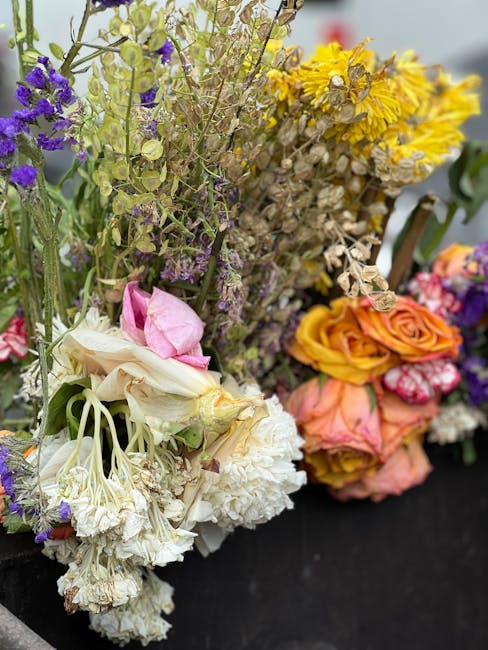
Common Mistakes to Avoid
Most problems with floral disposal are not dramatic. They are just small oversights that stack up.
- Mixing everything together. Once stems, foam, plastic, and cardboard are all in the same bag, sorting becomes much harder.
- Leaving disposal decisions until the end. By then, staff are tired and the venue wants a quick handover.
- Assuming the venue will handle it automatically. Some venues do, some absolutely do not. Ask early.
- Forgetting water and containers. Heavy vases and buckets can spill during transport if not emptied properly.
- Using delicate flowers for long events without a plan. Heat, crowd movement, and timing all matter.
- Ignoring tribute or message cards. These may need separate handling, especially on sympathy or funeral arrangements.
A common one, and this sounds small until it happens, is leaving stems with tags or tape still attached. Then the compost pile is no longer compost-friendly. Easy mistake. Easy to avoid too.
Another issue is over-ordering. People often order more flower volume than they actually need, just to be safe. Not a terrible instinct, but it does mean more waste if the extra stems have no purpose after the event. If budget is a concern, a simpler order from budget-friendly flowers can be more sensible than a huge display that creates disposal headaches later.
Tools, Resources and Recommendations
You do not need specialist machinery to manage flower disposal well, but a few simple tools help a lot.
| Item | Why it helps | Best use |
|---|---|---|
| Gloves | Protects hands from thorns, broken wire, and wet stems | Dismantling and bagging arrangements |
| Sharp scissors or snips | Makes separation of stems and ties faster and cleaner | Breaking down bouquets and table pieces |
| Reusable boxes | Keeps usable flowers protected during transfer | Donation, reuse, or collection |
| Bin bags by category | Reduces sorting time and mistakes | General waste, recyclable packaging, green waste |
| Towels or absorbent paper | Catches spills from vases and water tubes | Venue clean-up |
As for recommendations, start with a florist who can think beyond the arrangement itself. A supplier that understands delivery, setup, and end-of-event handling will usually save you time. If you are arranging flowers for a special occasion, pages like wedding flowers in Holland Park W8 or funeral flowers in Holland Park W8 can help you compare styles that are easier to manage before and after the event.
If your event is recurring, a flower subscription can also reduce admin because the order structure is more predictable. That may sound like a small detail, but predictable deliveries usually mean more predictable disposal too.
Law, Compliance, Standards, or Best Practice
For most event flower disposal, the main concern is not a unique flower law. It is the general duty to handle waste responsibly, follow venue rules, and avoid creating safety or hygiene issues. In practice, that means separating waste sensibly, not blocking exits, and being mindful of what can and cannot go into different waste streams.
Some materials used in event floristry are the bigger compliance concern than the flowers themselves. Floral foam, plastic wrap, ribbons, broken glass, wire, and mixed packaging can all affect disposal choices. If the venue has a recycling or waste contractor, ask what they accept. Do not guess. Guessing leads to bin-sorting regrets, which is a slightly dull kind of regret, but still regret.
Where events involve food service, public access, or large teams clearing down after a late finish, best practice usually means:
- keeping walkways clear
- separating sharp items from soft waste
- avoiding overflow in general bins
- protecting reusable floral containers
- confirming collection times in advance
For more formal or sensitive occasions, considerate handling matters too. Funeral and sympathy arrangements may include personal notes or tributes that should be returned to the family if appropriate. Some families keep the cards, some do not. It is best to ask rather than assume.
Best practice, honestly, is usually common sense done properly: keep materials separate, keep people safe, and keep the venue tidy.
Options, Methods, or Comparison Table
Different events call for different disposal methods. Here is a simple comparison to help you choose.
| Method | Best for | Pros | Limitations |
|---|---|---|---|
| Reuse | Fresh arrangements in good condition | Reduces waste, extends value, can decorate another space | Needs quick handling and a suitable next destination |
| Donation | Clean flowers with enough life left | Thoughtful, community-focused, often appreciated | Requires timing, transport, and a willing recipient |
| Composting | Organic stems and petals without unsuitable materials | Environmentally sensible, reduces landfill use | Needs separation from foam, tape, and plastic |
| General waste | Mixed or contaminated floral materials | Simple when nothing else is practical | Least sustainable option; should be used carefully |
For many events, the right answer is a mix. A ceremony arch might be dismantled into reusable sections, table flowers might be given away, and broken mechanics might go in waste. That is perfectly normal. The trick is deciding that before everyone starts pulling things apart.
Case Study or Real-World Example
Consider a small evening reception in Kensington. The room had a few statement arrangements at the entrance, compact table centres, and one larger floral display near the main wall. Nothing extravagant, just well chosen and quite polished.
Before the event, the organiser asked the florist how the flowers were constructed. The answer mattered. The table pieces were designed in reusable glass containers, the entrance arrangement used moss and wire mechanics, and the main display could be broken down into smaller clusters for the host's next-day lunch.
At the end of the night, the team spent ten minutes sorting the flowers into three groups: keep, gift, and dispose. The usable blooms were boxed up. The containers were wiped clean and returned. The remaining stems, stripped of ribbon and cellophane, were bagged separately for the waste contractor. No panic, no guessing, no half-finished piles beside the service lift.
The result was not glamorous, but it was efficient. And the room, by the time the last chair was folded, still felt looked after. That matters more than people think.
If the event had included fresh seasonal stems, something like seasonal flowers or a simple mixed arrangement would have made the same clean breakdown easier. The point is not to avoid beauty. It is to design beauty with the end in mind.
Practical Checklist
Use this before the event, not after. After is always busier.
- Confirm who is responsible for flower removal
- Ask how each arrangement is built
- Decide what will be reused, donated, composted, or discarded
- Check whether the venue accepts green waste, mixed waste, or nothing at all
- Keep gloves, boxes, scissors, and bags nearby
- Remove cards, ribbons, foam, plastic, and wires where appropriate
- Protect any flowers being transported to a second location
- Keep water and broken containers separate from floral waste
- Brief the clean-up team before guests arrive
- Leave the venue in the condition agreed in advance
One-line reminder: sort first, carry later.
Get a free quote today and see how much you can save.
Conclusion
The disposal rules for event flowers in Kensington and Chelsea are not really about rigid rules in the narrow sense. They are about good planning, sensible sorting, and respect for the venue, the event team, and the flowers themselves. When you build disposal into the event plan, everything feels calmer. The room clears faster, the waste is handled properly, and you avoid that awkward late-night pile-up by the service door.
Whether you are hosting a wedding, managing a corporate function, or arranging a formal tribute, the right approach is usually simple: separate the materials, reuse what you can, donate where appropriate, and dispose of the rest responsibly. Small effort. Big difference.
And if you are ever unsure, ask before the event rather than trying to improvise after midnight. That one bit of preparation tends to save a lot of trouble, and a surprising amount of energy too.
When done well, even the end of the arrangement feels considered. That is the lovely part, really.
Frequently Asked Questions
What are the basic disposal rules for event flowers in Kensington and Chelsea?
In practical terms, the main rule is to separate flowers from non-organic materials such as foam, ribbon, plastic wrap, and wire, then dispose of each part according to the venue's waste process. Reuse, donation, composting, and general waste are the usual routes.
Can event flowers be reused after a wedding or corporate event?
Yes, often they can. Fresh arrangements in good condition may be moved to another room, taken home, or gifted. The key is acting quickly and keeping containers and mechanics intact where possible.
Are floral foam and wire treated differently from the flowers themselves?
Yes. Flowers and foliage are organic, while foam, wire, tape, and packaging are mixed or synthetic materials. They should usually be separated before disposal, because they do not belong in the same waste stream.
Can I compost event flowers?
Sometimes, yes. Clean stems, petals, and foliage may be suitable for composting if they are free from plastic, foam, and other unsuitable materials. Always check what the local waste arrangement or venue system accepts.
Do Kensington and Chelsea venues usually handle flower disposal?
Some do, some do not. It varies a lot, so you should confirm this before the event. Never assume the venue will clear everything automatically, because that is where confusion begins.
What should I do with sympathy or funeral flowers after the event?
These are often handled more carefully than decorative event flowers. Families may want tribute cards or certain arrangements returned. If flowers are still usable, they may be kept, donated, or composted depending on the wishes of the family and the condition of the flowers.
Is donation of event flowers a good idea?
Yes, if the flowers are still fresh enough and you can organise collection promptly. It is a thoughtful option, but it needs timing and a willing recipient. Last-minute donation plans can be tricky, to be fair.
What is the safest way to break down large floral displays?
Wear gloves, use sharp snips, and separate the display into materials as you go. Keep sharp items, water, and heavy containers apart. If the display is large or high, it is better to dismantle it slowly than rush.
How can I reduce flower waste at an event?
Choose arrangements with a second life in mind, use reusable containers, avoid unnecessary packaging, and plan what happens to the flowers after the event. Even small design choices can make disposal much easier.
What flowers are easier to manage after an event?
Hardier flowers and simpler designs are often easier to sort and reuse. Mixed arrangements with less mechanical support are generally easier to break down than complex installations with lots of foam or wire.
Should I ask my florist about disposal before ordering?
Absolutely. That is one of the smartest questions you can ask. A florist can tell you how the arrangements are made, how long they should last, and what parts can be reused or separated more easily after the event.
What if the venue has strict waste rules?
Follow the venue's instructions first. Local rules, collection arrangements, and building policies may all affect what can be left onsite. If in doubt, agree the disposal plan in writing before the event starts.
If you are planning flowers for a local event and want cleaner breakdown, better presentation, and fewer surprises at the end of the night, a little forward thinking goes a long way. Honestly, that is half the battle.